It’s not about more hands. Clients want smarter sourcing, real AI skills and secure delivery, says Miroslav Pihorňa, the new CEO of Team8


The IT market is changing faster than ever and with it the way companies build teams, says Miroslav Pihorňa, the new CEO of Team8, a Trask company focused on external IT capacity delivery for enterprise clients. He brings speed, quality, and strong, long-lasting client relationships to a company specializing in IT outsourcing. In this interview, he explains why “just adding more hands” no longer works, how client expectations are evolving, how to accelerate IT capacity delivery, and which trends are reshaping the outsourcing landscape.

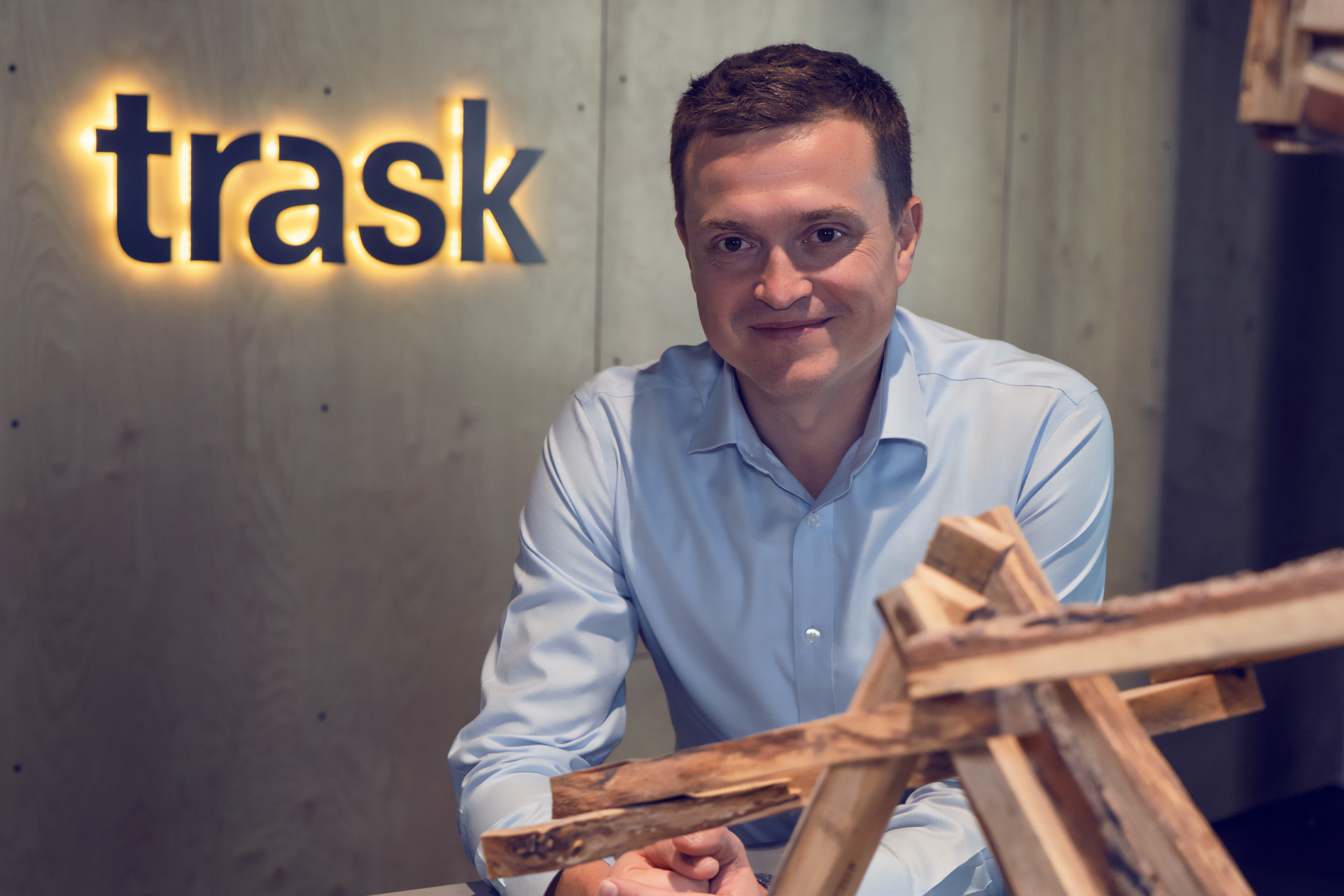
Enterprise backbone, scale-up tempo. That’s why I’m at Trask
Miro, you’ve been at Trask for only a short while. What are your first impressions?
Very positive. Trask is a strong, respected company with an excellent market reputation and product innovations clients can feel. At the same time, it’s a large organization with clear processes that ensure stability and quality. For me and my team, that means finding an effective way of working within this environment, keeping our own momentum, and delivering results.
Why did you decide to join Trask?
After years in smaller, very dynamic firms, I wanted an environment that combines speed and a drive for results with clear processes and a stable backbone. Trask connects these two worlds – it offers room for initiative, while providing the quality and structure you can build on long term.
I had been discussing cooperation with Pavel Riegger for some time. I felt a strong synergy between what I’d been doing – business focused on delivering IT capacity – and Trask’s know-how. An equally important reason was the human factor: leaders who are personally engaged, motivated, and intent on moving the company forward. Trask also has a solid foundation and international reach – a great platform to build on.
Miroslav Pihorňa

Miroslav Pihorňa is an experienced manager with a background spanning IT and finance. He leads Team8, a Trask company, focusing on external IT capacity delivery and partnership with enterprise clients. Before joining Team8, he spent seven years at Cool People – progressing from Business Development to Managing Director, and later CEO for the Czech Republic, Slovakia, and Austria. Earlier, he worked in banking (Crédit AgricoleCIB, UniCredit, Commerzbank, Sberbank) in sales and corporate client roles. He also has entrepreneurial and advisory experience (Alfa IT Outsourcing, CitySense, IcarusAI, and an investment in Hello Paper).
Bridging two worlds: The energy of contractors and the strength of Trask’s technology backbone
What’s your vision for Team8?
Finding high-quality IT talent isn’t easy. At Team8, we don’t just do IT outsourcing. We can place individual experts or assemble full delivery teams. I want Team8 to be one of the growth engines within the group. It’s not only about numbers. What matters is that clients see us as a reliable partner for IT outsourcing and that contractors want to come back to us. Wherever our services are needed, we want to be the first choice – in the Czech Republic and gradually in other markets. For contractors, we aim to be a platform where they find relevant projects without unnecessary admin and fair terms.
You came to Team8 with your own team. What’s the advantages?
I know these people and trust them. They’re responsible and hard-working, which lets us focus on business from day one instead of fine-tuning internal cooperation. My key partner is Denisa Podešťová, who leads recruiting. Together with other colleagues, we forma strong core to build on.
More than supplying capacity. Clients expect a partner who understands their business
What do clients really need in IT capacity today?
Speed, quality, and transparency. Companies are no longer looking for “more hands,” but for reliability – the certainty that someone will fit the team and deliver what’s needed. They also need a partner who understands their environment and internal processes. Not just a supplier, but someone who can respond quickly and transparently and bring added value beyond raw capacity.
Our advantage is our contractor community, with whom we stay in regular contact. We know their availability and preferences. When a request comes in, we don’t start from zero. We respond in hours to days, and thanks to Trask’s backbone we have the trust that opens doors and shortens time to start.
How has the market changed and what does that mean for managers?
The market is more mature than it used to be. It used to be enough to know a given technology and land “on a project” quickly. Today, it’s about quality, experience, and reliability – and about aligning expectations on both sides, with clients and contractors alike.
Trends shaping IT capacity
- Hybrid over full-remote: on-site presence is increasingly required while candidates still prefer flexibility → align expectations and conditions quickly to avoid delayed starts.
- AI and analytics: growing demand for people with real implementation experience, not just theory.
- Security and location: stronger emphasis on candidate origin and work with sensitive data → alignment with internal policies and regulation determines where teams can be built and how work modes are planned.
How does Team8 put this into practice?
The key is to stay close to both sides. We keep in touch with our contractor community, understand their situation, and nominate people with clear information about the role, environment, work mode, and rate. That shortens the time from brief to start and increases the chance of a good fit without compromising quality.

Mini-checklist for managers: 7 practical steps to cut time-to-staff
Speed of staffing often decides a project’s success. To turn a brief into an actual start within days, it helps to have a few things ready up front.
- Define the decision-making “trio” up front: Who gives the final go, who is the technical owner, who is the business sponsor? Names and calendar availability. Without this, shortlists stall in approvals.
- Budget as a range, not a single number: Set a range and state what moves the rate up or down – seniority, work mode (hybrid/on-site), niche skills. This avoids re-briefs and delays.
- Must-have ≠ everything: Define 2–3 true must-haves and 1–2 hard vetoes (e.g., “no remote outside the EU,” “no candidates without commercial AI implementation”). Treat the rest as nice-to-have to speed up selection.
- Security gates up front: NDAs, checks, work with PII, location restrictions, VDI/device setup – if clarified early, onboarding won’t stall on surprises.
- A process with no stopovers: Cap it at two rounds: (1) tech screen (30–45 min) and (2) team/fit (30 min). Set a 24-hour feedback SLA – every extra loop adds a week and the risk of losing candidates.
- Run parallel tracks instead of a waterfall: Launch reference checks, security pre-checks, and access prep at soft go. When hard go lands, the start is days away, not weeks.
- Start-date flexibility: State the earliest possible start plus tolerance (e.g., “ASAP; 2–3 weeks’ notice acceptable”). A fixed date with zero flexibility is a frequent hidden blocker.
Need to scale your IT capacity with trusted experts and secure delivery? Team8 can help.
Learn more
Read more insights